7 Warning Signs Your Sewer Line Is Failing
By The Rialto Plumbing Pros Team · August 19, 2025 · 6 min read
A failing sewer line rarely fails silently. Catch these seven warning signs early and you can often avoid a messy, expensive backup.
Your sewer lateral carries everything away from the house, and when it starts to fail, the symptoms show up all over the home at once. Catching the signs early lets you plan a repair instead of reacting to a sewage backup.
The 7 warning signs
Any one of these can point to a failing sewer lateral. Two or more together is a strong signal to get the line inspected on camera.
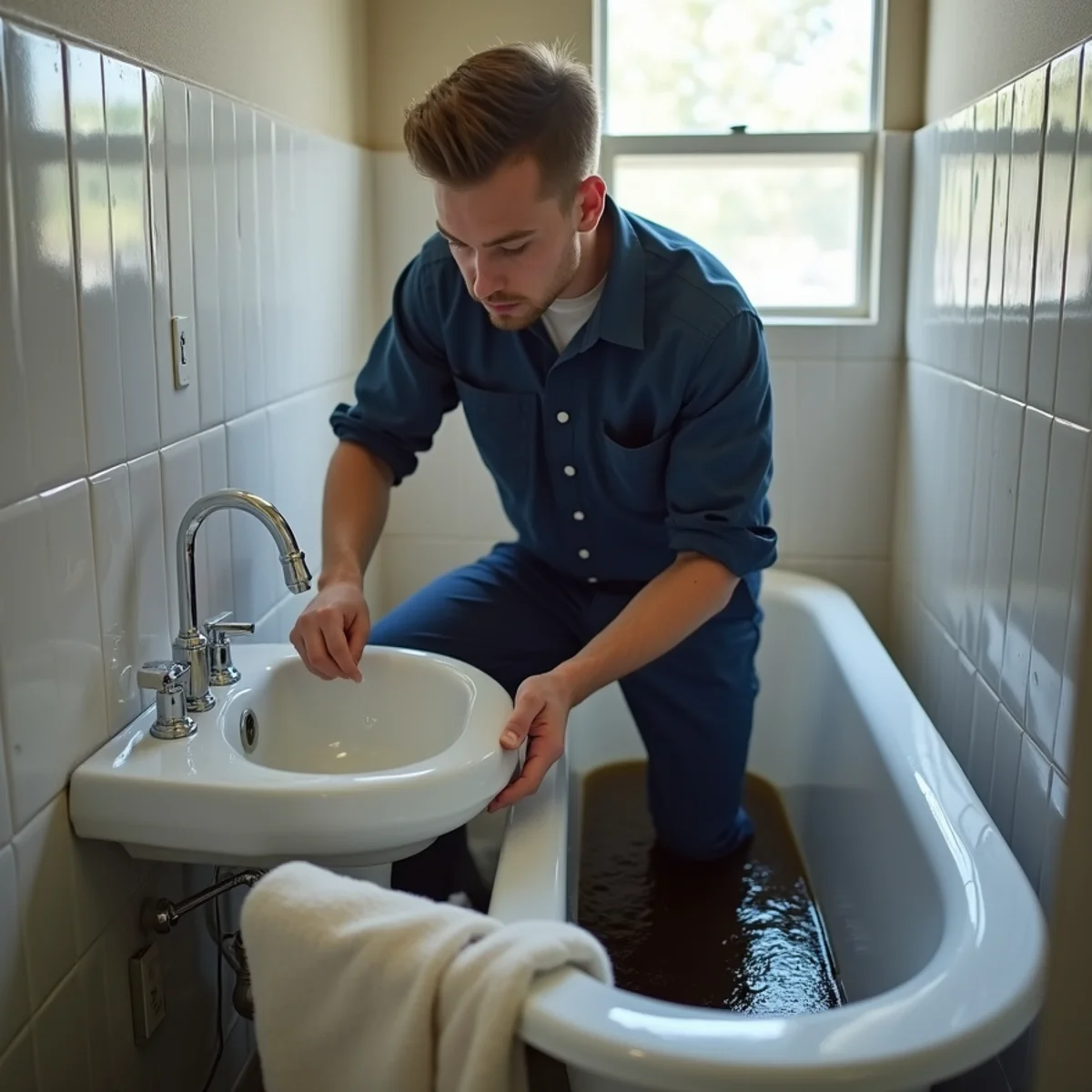
Multiple fixtures back up at once
When the toilet, tub, and sink all back up together, the problem is the main line — not one drain. It's the clearest sign of a sewer-lateral issue.
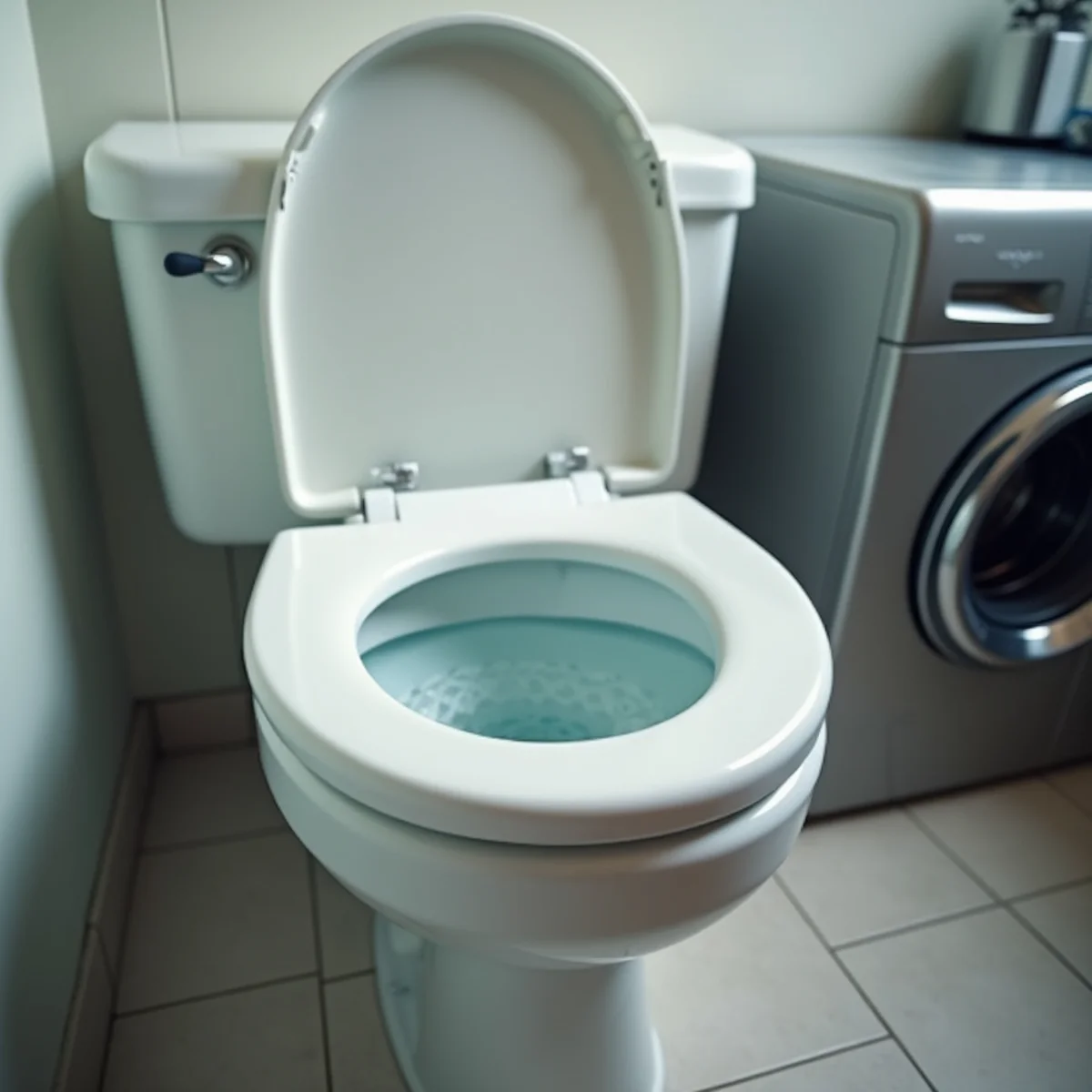
Gurgling toilets
Toilets that bubble or gurgle when you run a sink, shower, or washing machine mean air is trapped by a blockage deeper in the line.

Sewage odors indoors or in the yard
A persistent sewage smell means gases are escaping through a crack, break, or dried-out section of the lateral.

Slow drains throughout the house
When every drain in the home runs slow at once — not just one fixture — the restriction is in the shared main line.

Recurring clogs after clearing
Clogs that keep returning soon after they're cleared mean the cause — roots, grease, or a defect — is still in the pipe.

Soggy or extra-green lawn patches
A leaking sewer line feeds the soil above it, creating soggy spots, unusually lush grass, or even a small sinkhole.
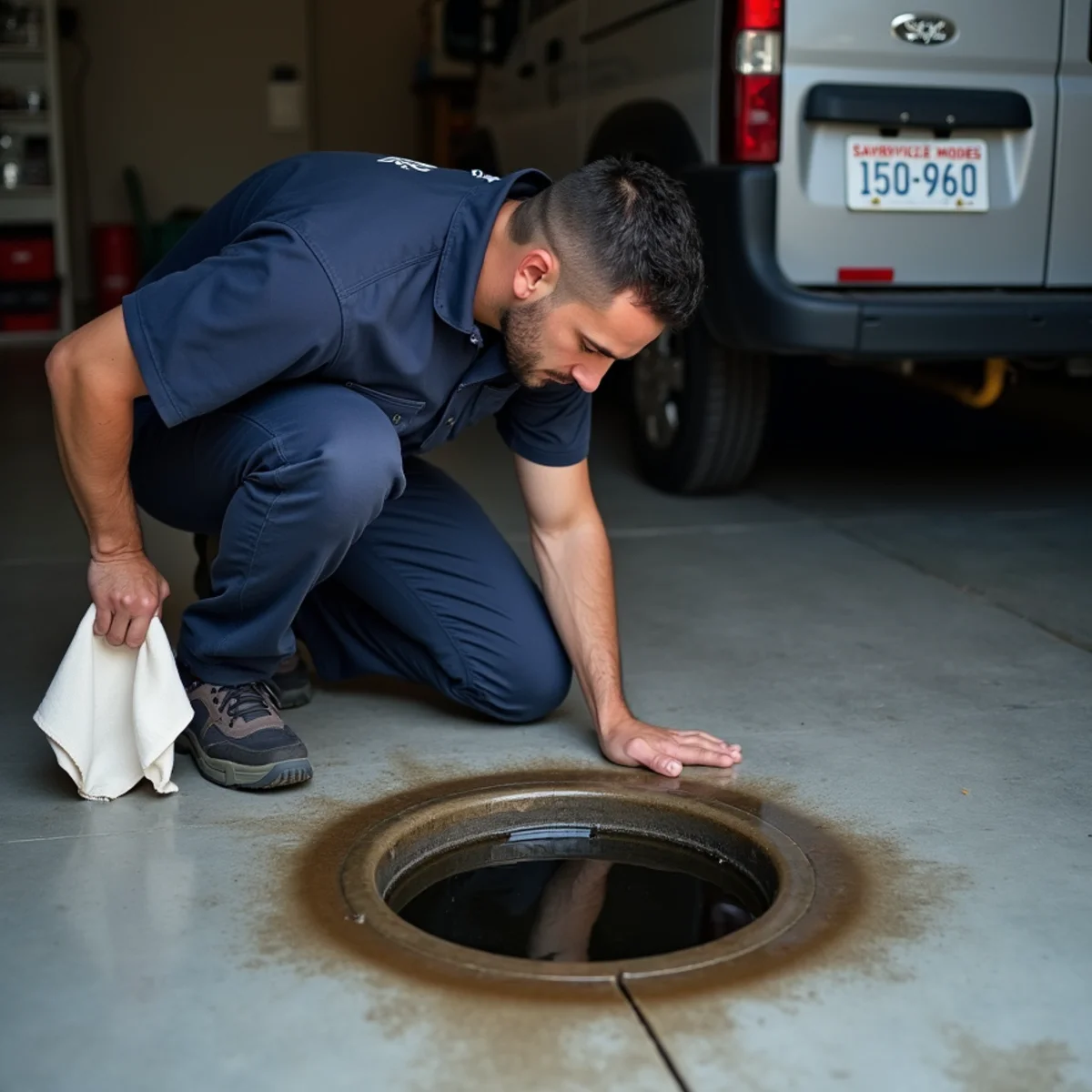
Sewage at the lowest drain
Backing sewage almost always surfaces first at the lowest fixture — often a tub or floor drain — before it reaches anything else.
What's usually going wrong
In older Rialto-area neighborhoods, clay and cast-iron laterals crack, offset, and fill with roots over decades. Roots find every joint; grease and scale narrow the pipe; and ground movement can break or misalign a section. A recurring clog does not prove the whole line needs replacement — evidence does.
Get it on camera
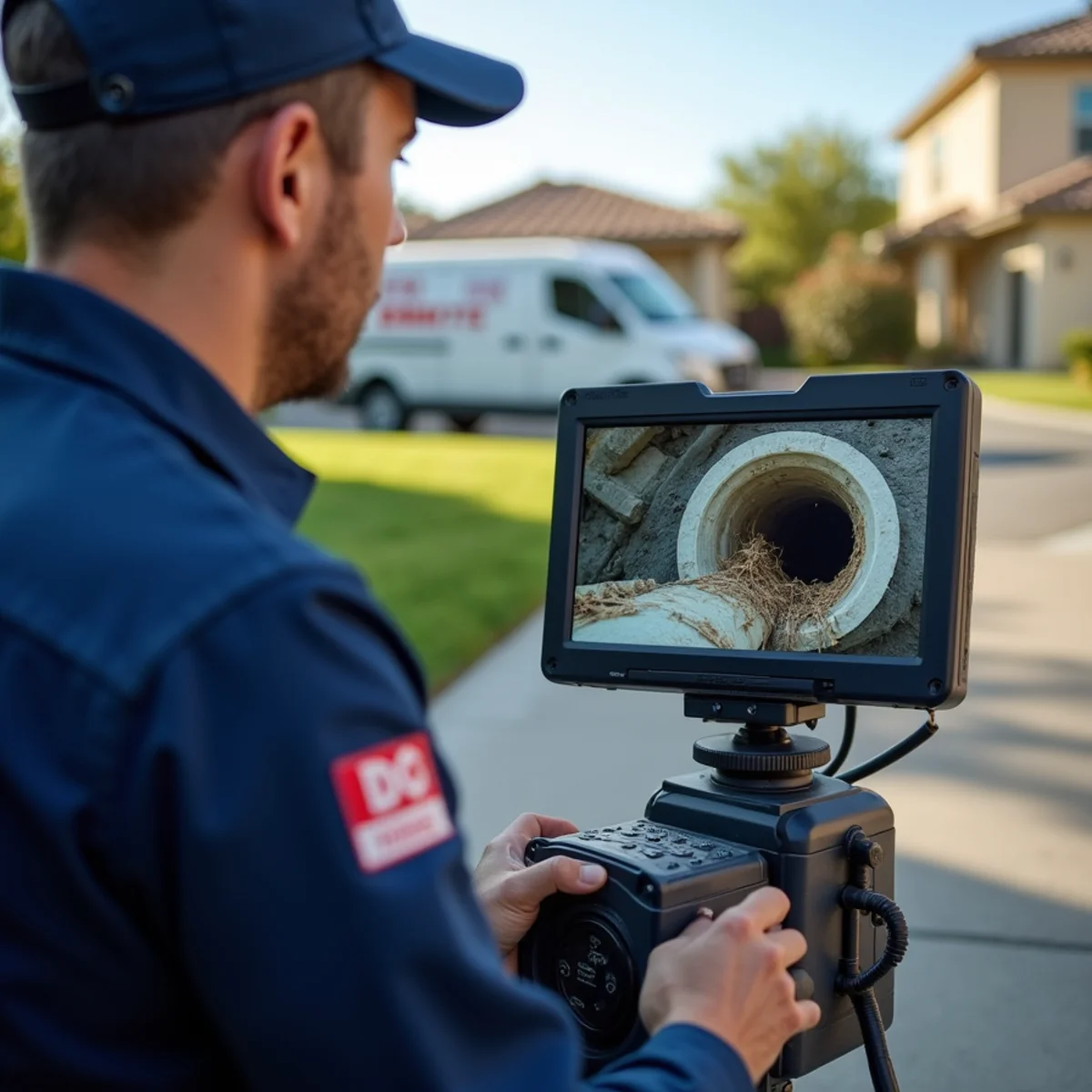
A video camera inspection ($145–$390 locally) shows the defect and its location, so any recommendation is tied to proof. Ask for the recording or a written defect location and depth before approving excavation.
Repair options
Depending on the confirmed defect, depth, access, and alignment, the fix might be a localized repair, trenchless sewer repair, or open excavation. Sewer repair runs $980–$5,000+ locally, so the written scope — locating, permits, access, restoration, testing, and warranty — matters as much as the number.
A plumber's take: why camera evidence protects you
A sewer replacement is one of the biggest plumbing bills a homeowner faces, so it should never be sold on a hunch. Insist on seeing the defect on camera and getting its location and depth in writing before approving any excavation. Root removal can restore flow without fixing the damaged joint that let the roots in — so 'the drain runs now' isn't proof the problem is solved. The recording tells the real story.
Trenchless or excavation: what decides it
Once we've confirmed the defect, the method depends on the pipe's condition, depth, alignment, access, and what's above it. Trenchless lining or bursting can save your yard and driveway when conditions allow. A collapsed pipe, severe misalignment, or tight access can rule it out, making targeted excavation the right call. We compare both — scope, restoration, and warranty — so you're choosing on evidence, not fear.
What the camera actually shows
A sewer camera inspection turns guesswork into evidence, and it's worth understanding what you're looking at. The camera travels the lateral while a locator tracks its position and depth from the surface, so a defect isn't just seen — it's pinpointed. On the monitor you'll see roots pushing through joints, cracks and fractures, offset sections where the pipe has shifted, bellies that hold standing water, and scale or grease narrowing the diameter. That footage tells us whether the fix is a spot repair, a trenchless liner, or excavation, and exactly where to work. Insist on seeing it before approving any dig — a legitimate recommendation is backed by a recording and a marked location, not a verbal 'trust me.'
The bottom line
A failing sewer line announces itself across the whole house. Catch the signs early, get the line on camera, and compare trenchless with excavation on the facts. We diagnose with proof and lay out the real options before any digging starts.
Related services & areas