Why Older San Bernardino County Homes Need Repiping
By The Rialto Plumbing Pros Team · November 4, 2025 · 7 min read
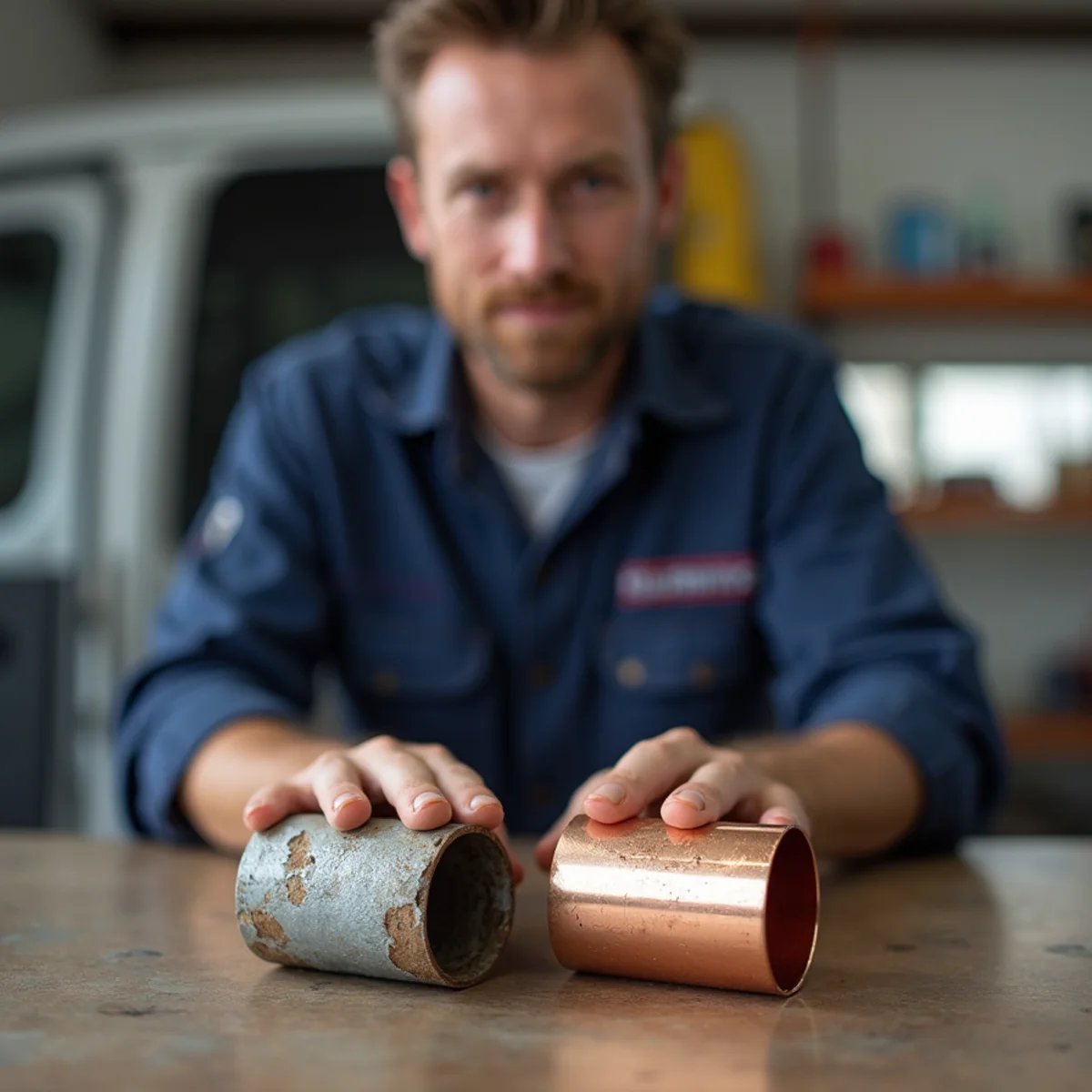
Galvanized pipe corrodes from the inside out. If your older San Bernardino County home has rusty water or weak pressure, here's why repiping may be the fix.
Many homes across San Bernardino County — from Rialto and Muscoy to San Bernardino and Bloomington — were built with galvanized steel supply lines. It was the standard for decades, but galvanized pipe corrodes from the inside out, and homes built before the 1970s are now well past its service life.
How galvanized pipe fails
The zinc coating that protects galvanized steel eventually wears away, and the steel beneath rusts. Rust builds up inside the pipe, narrowing the passage and flaking into your water. That's why the symptoms are so consistent: rusty or discolored water, chronically low pressure, and repeated pinhole leaks. Rialto's hard water only accelerates the buildup.
Repair or repipe?
A single confirmed leak may suit a localized pipe repair ($190–$1,000 locally). But when failures repeat across multiple sections or the whole system shows material-wide corrosion, patching one leak just moves the problem down the line. Whole-home repiping replaces the aging system so you stop paying for the same failure twice.
Copper or PEX
Both are excellent modern materials. Copper is long-proven and rigid; PEX is flexible, fast to install, resists scale, and is often more economical. A good estimate identifies the existing material, the proposed material, fittings, access method, and connection plan — so you know exactly what you're getting.
What a good repipe looks like
- A written comparison of localized repair, partial repipe, and full repipe
- Access planned to minimize wall openings, with finish restoration included
- Permits pulled and the work inspected to code
- Pressure, leak, and flow testing before closeout
- Milestone payments — not full payment upfront
A plumber's take: how we confirm it's really the pipes
Rusty water and low pressure can have other causes, so we confirm before recommending a repipe. We check whether discoloration is on the hot side, cold side, or both, test static and flowing pressure, and inspect exposed pipe for the tell-tale scaling and corrosion of failing galvanized steel. When the evidence points to system-wide deterioration rather than one bad section, a repipe is the honest answer — and we say so with proof.
What a well-run repipe day actually looks like
A good repipe is disruptive for less time than most people fear. We protect the home, plan access to minimize wall openings, run new copper or PEX, pressure-test the system, and coordinate the inspection before restoring finishes. You'll have water off for portions of the work, not days on end. Milestone payments tie your cost to diagnosis, approved materials, installation, inspection, and successful testing — never everything upfront.
PEX vs. copper: choosing for your home
When it's time to repipe, the material question comes up fast, and both good options have trade-offs. Copper is rigid, long-proven, and handles heat well, but it costs more, takes longer to install, and — in very hard water — can eventually scale. PEX is flexible, faster and less invasive to install (which often means fewer wall openings and lower labor), resists scale, and tends to be more economical, though it must be kept away from UV and certain rodent exposure. For most San Bernardino County homes we're repiping out of failed galvanized, PEX offers the best balance of cost and disruption, but we walk you through both against your home's layout, water, and budget rather than defaulting to one.
The bottom line
Galvanized supply lines don't get better — they rust from the inside until pressure drops and pinholes appear. If your older San Bernardino County home shows the signs, a copper or PEX repipe ends the cycle. We confirm the diagnosis, plan clean access, and pressure-test before closing walls.
Repair one section or repipe the whole home?
Cost usually settles the decision. A single section repair runs about $190–$1,000 locally, while a whole-home repipe is a larger, quoted investment — but two or three separate emergency repairs on a failing system can approach the cost of doing it once and being done. We give you both numbers and the pattern of failures behind them, so you're weighing real figures rather than a sales pitch.
This is the question we get most, and the honest answer depends on the pattern of failures. One confirmed leak in an otherwise sound system is a section repair — no reason to repipe a whole house for it. But when leaks repeat across multiple runs, the water is discolored throughout, and the pipe material is uniformly corroded, patching one spot just moves the next failure a few feet down the line. We map where you've had trouble, inspect what we can access, and lay out repair versus repipe with real numbers so the choice is yours.
Related services & areas