No Hot Water? How to Troubleshoot Your Water Heater
By The Rialto Plumbing Pros Team · December 3, 2025 · 7 min read
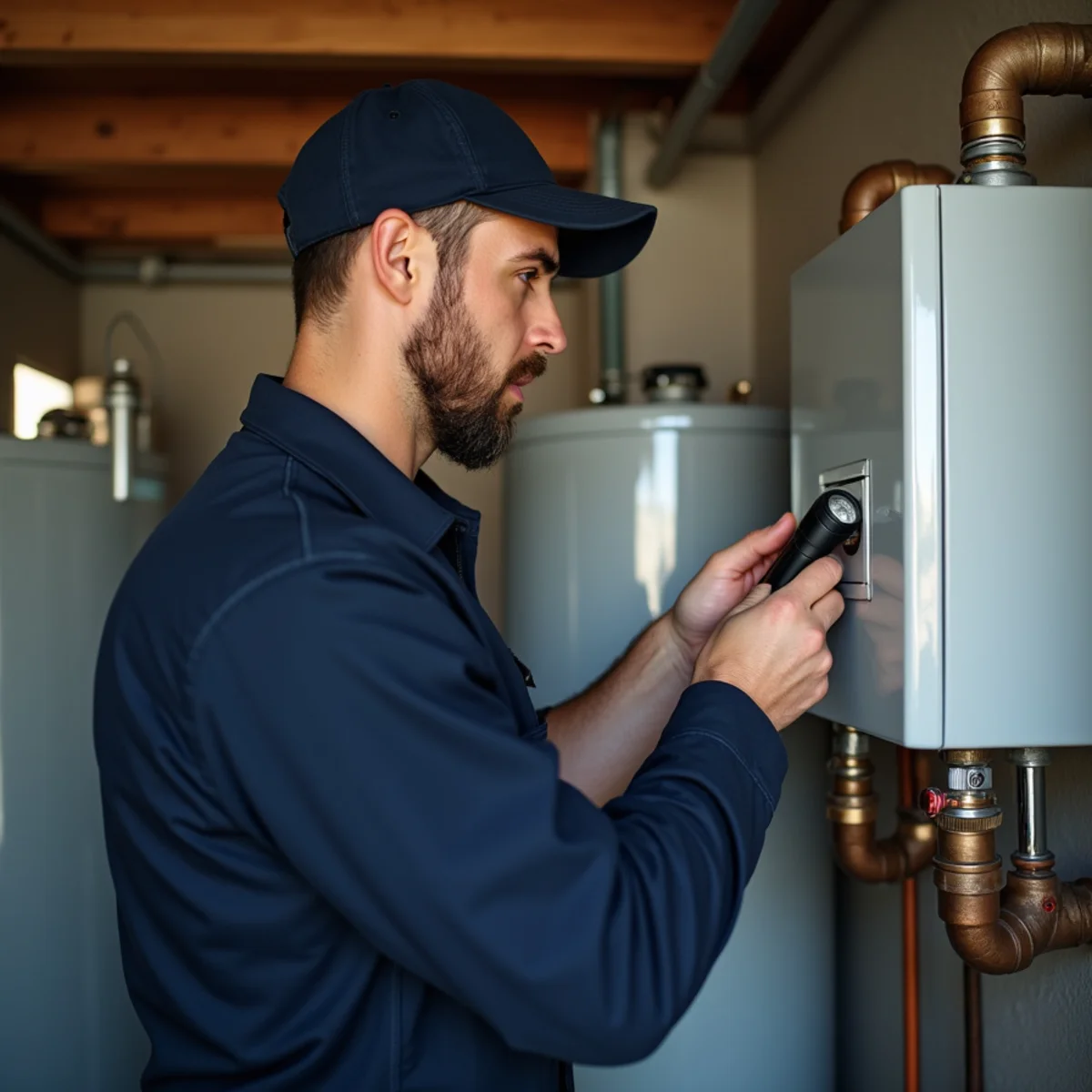
Before you assume the worst, run through these safe checks. Here's how to troubleshoot a water heater with no hot water — and when to call a pro.
Waking up to a cold shower is frustrating, but the cause isn't always a failed tank. A few safe checks can tell you whether it's a simple reset or a sign the unit needs professional attention. Never open a sealed combustion chamber or work on gas components yourself — leave those to a licensed plumber.
For a gas water heater
- Check the pilot light or igniter — many modern units show a status light. If the pilot is out, follow the manufacturer's relight instructions exactly.
- Confirm the gas is on and other gas appliances work.
- Check the thermostat setting; someone may have turned it down.
- Listen for rumbling or popping — that's usually scale from Rialto's hard water and signals the tank needs a flush or is aging.
For an electric water heater
- Check the breaker; a tripped breaker is a common cause of no hot water.
- If it trips again after resetting, stop — that points to an electrical fault or failed element that needs a pro.
- A failed upper or lower heating element produces no hot water or runs out fast.
Signs it's time to call
Rusty or metallic-smelling hot water, water pooling around the base, water that never gets hot enough, or a unit past 10–12 years with recurring problems all warrant a professional look. Water-heater repair is estimated locally at $145–$680; tank replacement at $780–$2,000; and tankless installation at $1,450–$3,500.
Repair or replace?
Don't let anyone justify a replacement on age alone. A good plumber documents the current unit's condition — the burner or elements, thermostat, relief valve, venting, and anode — and compares repair, tank replacement, and tankless installation based on the evidence. Because Rialto's hard water (160 mg/L average) accelerates scale, an annual flush and, in some homes, water treatment can extend a tank's life significantly.
What that popping or rumbling sound means
A water heater that pops, rumbles, or knocks is almost always fighting sediment. In Rialto's 160 mg/L hard water, minerals settle to the bottom of the tank and harden; the burner then has to heat through that layer, which wastes gas, slows recovery, and stresses the tank. An annual flush clears loose sediment, but a heater that's rumbled for years may already be scaled beyond what a flush can fix.
A plumber's take: age is a clue, not a verdict
We won't tell you to replace a heater just because it's twelve years old. We document the actual condition — the burner or elements, thermostat, relief valve, venting, and anode — and compare the repair cost to a new unit. A sound tank with a failed thermostat is a cheap fix; a tank leaking from the body is done. The honest answer comes from the inspection, not the birthday on the label.
Simple maintenance that prevents most failures
Most water-heater emergencies are preventable with two habits. First, flush the tank once a year to clear the sediment that hard water leaves behind — it's the single biggest factor in Rialto tank failures, and it keeps the burner efficient. Second, test the temperature-and-pressure relief valve annually and glance at the base for any moisture or corrosion. On tankless units, an annual descaling does the same protective work. Catching a weeping fitting or a failing element during a five-minute check is far cheaper than replacing a heater that quit without warning — and it buys you time to make a considered repair-or-replace decision instead of a rushed one.
The bottom line
Run the safe checks — pilot or breaker, thermostat setting, and any error light — then call if the unit is leaking, making rusty water, or past its prime. We diagnose the real cause and give you a straight repair-or-replace answer with upfront pricing.
Tankless units troubleshoot differently
One more tankless-specific note: hard water is the quiet enemy. Because a tankless unit heats water on demand across a compact heat exchanger, scale builds there faster than you'd expect in Rialto's water, gradually cutting output and eventually triggering faults. An annual descaling — and, ideally, upstream water treatment — keeps a tankless system delivering the endless hot water it was bought for.
If you have a tankless water heater, the checks change. Most display an error code — note it before resetting, because it points straight to the cause, from ignition faults to a flow-sensor issue. Tankless units are also sensitive to scale in hard water, which can trigger flow and heating errors that a descaling service resolves. And because they need adequate gas and venting, a unit that never quite keeps up under heavy demand may be undersized rather than broken. When in doubt, give us the code and we'll tell you what it means.
Related services & areas