Slab Leaks in the Inland Empire: Why Our Soil Is to Blame
By The Rialto Plumbing Pros Team · October 16, 2025 · 6 min read
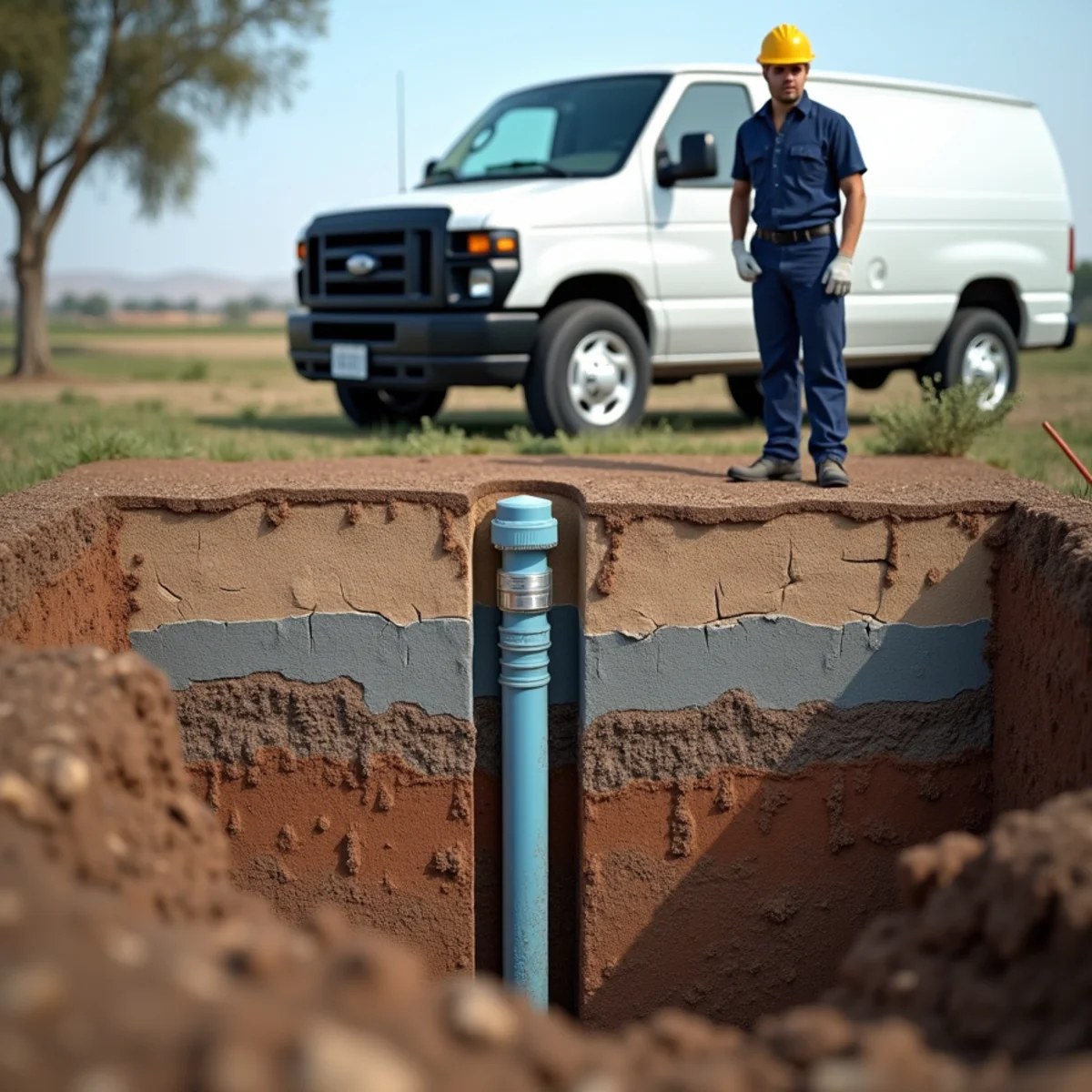
Why do Inland Empire homes get so many slab leaks? A lot of it comes down to what's under the foundation. Here's the connection.
Slab leaks show up again and again in Inland Empire homes, and it's not bad luck. The region's soil, water, and geology combine to stress the pipes routed beneath our concrete foundations. Understanding why helps you catch a leak early — when the repair is small.
Expansive and shifting soils
Local planning materials reference alluvial, eolian, and wash deposits and potentially expansive soil conditions across the valley. Expansive soil swells when wet and shrinks when dry, and that seasonal movement flexes the pipes running through the slab. Over years, the stress can wear or crack a line.
Hard water from the inside
While the soil works on the outside, hard water works on the inside. With Rialto's supply averaging 160 mg/L hardness, scale and mineral action inside copper lines can contribute to pinhole leaks. It's a two-front problem for slab-routed pipes.
Regional fault movement
The area sits near the Rialto-Colton, San Jacinto, and San Andreas faults. Ground movement can affect pipe joints over time. This is context for careful diagnosis, not a prediction about any individual address — but it's part of why slab-routed lines here deserve attention.
Catching it early
Watch for warm floor spots, unexplained high bills, low pressure, and the sound of running water with fixtures off. A plumber confirms a slab leak with pressure testing and electronic locating — no exploratory floor demolition. Early detection usually means a spot repair or reroute rather than a major job, and it strengthens any insurance claim.
A plumber's take: reading the early signs on a slab home
On slab-on-grade homes we watch for a cluster of clues: a warm patch on the floor, a water bill that climbs without a usage change, low pressure, and the faint sound of running water with everything off. Any one can have another cause; together they strongly suggest a slab leak. Because the pipe is under concrete, we confirm with pressure testing and locating rather than guessing — then open only the spot that needs it.
Why prevention is limited — and what actually helps
You can't stop expansive soil from moving or the ground near a fault from shifting, but you can reduce the other half of the problem. Treating hard water slows the internal scaling that thins copper lines, and catching a leak early keeps it from undermining the slab. For homes that have had repeated slab leaks, rerouting or repiping the affected lines out of the slab is the durable answer.
How to protect your slab-routed pipes
You can't change the soil under your foundation, but you can reduce the other pressures on slab-routed pipes. Treating hard water slows the internal scaling and corrosion that thin copper lines from the inside — the half of the slab-leak equation you actually control. Keeping household water pressure in a healthy range (a failing pressure regulator that lets pressure climb stresses every joint) is another quiet safeguard. And the most important habit is simply catching leaks early: a warm floor, an unexplained bill, or the sound of running water with everything off deserves a prompt locate. For homes that have already had repeat slab leaks, rerouting the affected lines out of the slab removes them from harm's way for good.
The bottom line
Inland Empire slab leaks come from a combination the region is built on — expansive soil, hard water, and fault movement. It's context for careful diagnosis, not a reason to panic about your address. Watch for the signs, act early, and get a precise locate before any floor is opened.
What the soil report can and can't tell you
This is also why we're skeptical of anyone who quotes a slab-leak repair sight unseen or over the phone. The location under the slab, the pipe's condition, and how many leaks you've had all change the right approach, and none of that is knowable from a soil map or a symptom alone. A proper diagnosis costs far less than opening the wrong section of floor — and it's the only honest basis for a repair recommendation.
Homeowners sometimes ask whether a soil or geology report predicts a slab leak. It doesn't — it describes conditions, not the state of your specific pipes. Alluvial and expansive deposits explain why the region sees more slab leaks than a stable-soil area would, but plenty of homes on that same soil never develop one. Treat the local geology as a reason to know the warning signs and act early, not as a diagnosis. The only way to confirm a slab leak is to test the system and locate it — which is exactly what we do before recommending any repair.
Related services & areas